

Infertility affects more than 15% of couples globally and leads to emotional stress and unexplained reproductive challenges. Both men and women face this growing concern, and panchakarma treatment for infertility has become a complete alternative that many couples haven't fully explored. The World Health Organisation reports that 1 in 6 couples worldwide experience infertility during their reproductive years. Indian statistics show that male infertility accounts for nearly 50% of all cases.
Many couples struggling with fertility don't know about Ayurveda's complete approach to treatment. Panchakarma for infertility offers customised therapies that target why it happens instead of just treating symptoms. Ayurveda for fertility focuses on balance, nutrition, and overall well-being - elements that conventional treatments often miss. Clinical studies show ayurvedic panchakarma treatment for infertility works safely and effectively for conditions like oligoasthenozoospermia.
Let's take a closer look at what conventional doctors might not tell you about natural conception through Panchakarma. These ancient therapies work to detoxify the body, balance hormones, and create optimal conditions for conception. The treatment approaches vary between male and female infertility issues, and we'll explore specific Panchakarma methods that could succeed where other treatments haven't worked.
Key Takeaways
Discover how ancient Panchakarma therapies address hidden fertility barriers that conventional medicine often overlooks, offering natural pathways to conception through holistic healing.
• Panchakarma targets root causes: Unlike conventional treatments that manage symptoms, these five ancient therapies eliminate toxins (Ama) and restore dosha balance for optimal reproductive health.
• Hidden fertility blockers revealed: Poor digestion, stress-induced hormonal chaos, blocked reproductive channels, and Vata imbalances can prevent conception even when standard tests appear normal.
• Gender-specific treatments deliver results: Specialised therapies like Uttara Basti for women and Yapana Basti for men show 70-80% success rates in addressing specific reproductive challenges.
• Stress reduction enhances conception: Shirodhara therapy reduces cortisol levels by 35% while Nasya directly regulates reproductive hormones through the hypothalamic-pituitary axis.
• Complementary approach maximises success: Panchakarma can enhance IVF/IUI outcomes by improving gamete quality and uterine health, offering hope where conventional treatments have failed.
The personalised 14-21-day detoxification process creates ideal conditions for natural conception by addressing the whole person rather than isolated symptoms, making it a powerful alternative or complement to modern fertility treatments.
What is Panchakarma and Why It Matters for Fertility
Panchakarma stands as one of Ayurveda's most powerful healing systems. The Sanskrit word breaks down into "Pancha" meaning five and "Karma" meaning actions. These five cleansing procedures detoxify the body and restore balance to the three doshas—Vata, Pitta, and Kapha. Panchakarma treatment provides a natural path to conception for couples facing fertility challenges by fixing imbalances in the body.
Understanding Panchakarma in Ayurveda
Panchakarma takes a different approach from quick-fix solutions. The treatment revitalises cells and removes reproductive toxins (Ama) from the body. The five classical procedures consist of Vamana (therapeutic vomiting), Virechana (therapeutic purgation), Basti (medicated enema), Nasya (nasal administration), and Raktamokshana (bloodletting). These therapies target specific parts of reproductive health and create the perfect environment for conception.
The treatment follows three phases: Purvakarma (preparation), main procedures, and Paschat Karma (post-therapy care). This detailed process takes 14-21 days and works best when done 1-3 months before trying to conceive.
How Panchakarma is different from modern infertility treatments
Modern fertility treatments use hormones or surgery to achieve quick conception success. Panchakarma addresses the mechanisms through natural methods. Modern treatments handle symptoms, while Panchakarma balances the entire system.
Panchakarma can work alongside modern treatments. Research suggests it might boost IVF and IUI success rates by improving uterine health and gamete quality. Many doctors now recommend using both approaches together for the best results.
The role of dosha balance and detox in conception
Your fertility connects directly to your overall health through balanced doshas. Toxins build up from poor diet, lifestyle choices, and environmental factors, which block natural conception. Panchakarma removes these toxins and creates a balanced environment that helps reproduction.
Dosha balance affects reproductive tissues, especially when it comes to Shukra Dhatu (reproductive tissue) and hormone regulation. Panchakarma optimises fertility by purifying reproductive channels (Srotas). This detox process prepares both partners through what Ayurveda calls Garbha Samskara—the sacred preparation for parenthood.
The mix of detox, stress reduction, and hormone balancing creates perfect conditions for natural conception. This makes Panchakarma a great addition to—or replacement for—regular fertility treatments.
Hidden Causes of Infertility That Panchakarma Addresses
Ayurveda recognises several hidden causes of infertility that standard medical diagnoses miss. Standard tests might look normal, but root factors can still affect fertility. That's why panchakarma treatment takes a deeper look at infertility.
- Toxin buildup (Ama) and poor digestion (Agni)
Ama in Ayurveda means undigested food residues and metabolic waste that build up in your body. Agni represents the digestive fire you need for proper metabolism. Toxins block reproductive channels as digestion gets weaker. Your test results might look fine, but these toxins could still block fertility pathways.
Your body needs proper nutrient absorption to create quality Shukra Dhatu (reproductive tissue). Panchakarma's cleansing processes target built-up Ama to create the perfect environment for conception.
- Hormonal imbalances and stress
The connection between psychological stress and infertility runs deep. Studies show 40% of women feel anxious or depressed before their first visit to an infertility clinic. Tests found depression in 35% of women who underwent ART treatment.
Your body's stress response triggers the hypothalamic-pituitary-adrenal axis and blocks the hypothalamic-pituitary-gonadal axis. This throws hormones into chaos and leads to irregular ovulation, amenorrhea, and reduced fertility. Panchakarma uses treatments like Shirodhara to fix these stress patterns and restore your hormone balance.
- Blocked reproductive channels (Srotas)
Srotas act as subtle channels carrying nutrients and reproductive fluids through your body. The fallopian tubes belong to the Artavavaha srotas—the female reproductive system in Ayurveda. Blockages in these channels, called Sanga Srotodushti, can stop conception even if everything else looks healthy.
Uttara Basti treatment targets these blockages to clear reproductive pathways naturally.
- Vata disturbance and Apana Vata dysfunction
Apana Vata controls reproductive functions from the lower abdomen and pelvis. This downward-moving energy manages menstruation, ovulation, ejaculation, and childbirth. Problems start when Apana Vata loses its balance.
Low Apana Vata in your pelvic area can lead to immature or poor-quality eggs, which often happens with PCOS. Panchakarma's Basti treatments help restore Apana Vata's balance to boost reproductive health naturally.
Panchakarma Therapies That Support Natural Conception
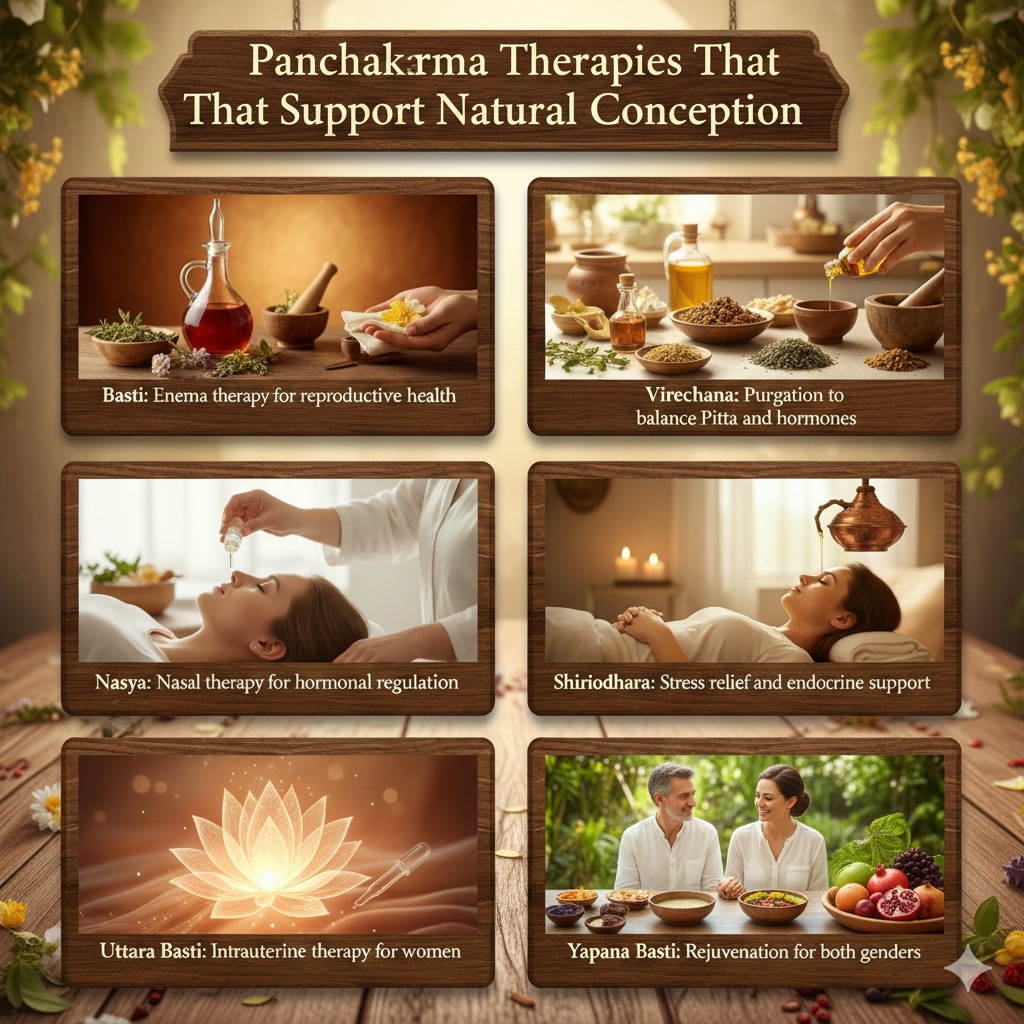
Panchakarma's specialised therapies influence reproductive health by addressing why imbalances happen. These treatments work together to create perfect conditions that help natural conception through systematic purification and rejuvenation.
- Basti: Enema therapy for reproductive health
Basti therapy introduces medicated oils or decoctions into the rectum and targets Vata imbalances. This treatment is a vital part of Panchakarma that influences Apana Vata—the downward-moving energy controlling reproduction. The therapy improves pelvic circulation and builds stronger reproductive tissues by balancing this energy.
- Virechana: Purgation to balance Pitta and hormones
Virechana uses therapeutic purgation to remove excess Pitta dosha and toxins from the body. Research shows this treatment gave an 80.92% boost in total sperm count before fertility treatments. The controlled purgation cleanses the liver and supports hormone balance, especially when you have conditions like PCOS that affect fertility.
- Nasya: Nasal therapy for hormonal regulation
Nasya treatment uses medicated oils through the nasal passages that directly affect the hypothalamic-pituitary axis. The therapy balances hormones by changing GnRH, LH, and FSH secretion. Nasya helps regulate estrogen and progesterone levels—vital hormones to conceive successfully.
- Shirodhara: Stress relief and endocrine support
Shirodhara—the gentle pouring of warm oil on the forehead—substantially reduces stress hormones. Studies show this therapy lowers serum cortisol from 14.52 µg/dL to 9.45 µg/dL after treatment. On top of that, it enhances sleep quality and promotes hormone balance by stimulating the pineal gland, creating ideal conditions to conceive.
- Uttara Basti: Intrauterine therapy for women
Uttara Basti administers medicated oils directly into the uterus and works well for female reproductive issues. Research reveals this therapy cleared tubal blockages in 80% of patients, and 40% became pregnant within two months of treatment. This specialized therapy nourishes reproductive tissues and removes fallopian tube blockages.
- Yapana Basti: Rejuvenation for both genders
Yapana Basti, a specialized rejuvenative enema, is a great way to get benefits for both male and female fertility. Unlike regular Basti, it combines nutrition with cleansing. Research proves it helps follicular growth and induces ovulation. Men's Shukra Dhatu (reproductive tissue) becomes stronger, and sperm quality improves, making it a complete fertility treatment.
Gender-Specific Panchakarma Approaches
Panchakarma treatments between men and women show substantial differences that address their unique reproductive challenges.
Panchakarma treatment for male infertility
Male infertility treatment targets Shukra Dhatu (reproductive tissue) strengthening. Male factors cause 40-50% of infertility cases. Virechana and Yapana Basti work to improve sperm quality, motility, and semen viscosity. Nasya helps regulate hormones, while herbs like Kapikacchu, Ashwagandha, and Gokshura boost count and motility. The urinary passage treatment Uttarbasti clears blockages in the seminal channels effectively.
Ayurvedic treatment for female infertility
Uttara Basti treatment delivered to the uterus helps with PCOS, tubal blockages, and endometrial issues. Virechana balances Pitta and restores ovulatory rhythm, while Raktamokshana proves beneficial for pelvic congestion and endometriosis. Herbal combinations of Shatavari, Ashoka, and Lodhra support the body's hormonal balance and uterine function.
How therapies are customised by gender and dosha
Each treatment plan reflects the patient's individual dosha imbalances. Vata's influence extends to ovulation and sperm motility, Pitta affects hormonal balance, and Kapha can trigger blockages and cysts. Practitioners customise these therapies after a complete examination.
Success rate of Ayurvedic treatment for infertility
Treatment outcomes vary, notwithstanding that clinical results look promising. PCOS ovulation restoration reaches about 70% within 3-6 months, and male motility improves by roughly 65% after Basti therapy. Case studies document successful conceptions after Ayurvedic treatments, with some showing 75% conception rates.
Conclusion
- Panchakarma provides a detailed approach to fertility that goes beyond standard treatments. This ancient Ayurvedic practice tackles why health issues happen instead of just treating symptoms. Couples who don't get answers from modern medicine about their fertility often find new hope in these traditional therapies.
- The real power of Panchakarma lies in how it adapts to each person. These aren't one-size-fits-all treatments - practitioners customise each therapy based on your dosha imbalances and specific fertility challenges. The detoxification process clears out built-up toxins (Ama) that block conception pathways and creates the perfect environment for natural fertility.
- Stress and hormonal imbalances affect reproductive health substantially, but many couples don't realise this. Therapies like Shirodhara and Nasya target these specific issues and help lower cortisol levels while balancing key reproductive hormones. Treatments such as Uttara Basti and Virechana clear physical blockages and help restore proper flow through reproductive channels.
- The results tell a compelling story. Clinical studies reveal impressive improvements in both male and female fertility markers after Panchakarma therapy. These natural treatments show great promise - from better sperm quality to restored ovulation cycles.
- Couples should think about mixing conventional treatments with Ayurvedic approaches before ruling out natural conception. Panchakarma can boost IVF success rates while tackling underlying health issues. While results vary from person to person, this comprehensive path gives new hope to many couples who want to start families.
- Panchakarma shows us that fertility reflects our overall health balance. These ancient therapies create ideal conditions for conception through detoxification, stress reduction, and dosha harmony - aspects that modern medicine might miss. This time-tested approach could help you discover your full reproductive potential naturally if you're facing fertility challenges.
FAQs
Q1. What are the most effective Panchakarma therapies for enhancing fertility?
Some of the most beneficial Panchakarma therapies for fertility include Basti (enema therapy), Virechana (purgation), Nasya (nasal therapy), Shirodhara (oil pouring on forehead), and Uttara Basti (intrauterine therapy). These treatments address various aspects of reproductive health, from hormonal balance to stress reduction.
Q2. How does Panchakarma differ from conventional fertility treatments?
Panchakarma focuses on addressing the root causes of infertility through natural detoxification and balancing of bodily systems. Unlike conventional treatments that often manage symptoms, Panchakarma aims to create an optimal environment for conception by eliminating toxins, balancing hormones, and improving overall reproductive health.
Q3. Can Panchakarma treatments improve the success rates of IVF or IUI?
Yes, Panchakarma can complement modern fertility treatments. By enhancing overall reproductive health, improving uterine conditions, and optimising gamete quality, Panchakarma may increase the success rates of assisted reproductive technologies like IVF and IUI.
Q4. How long does a typical Panchakarma treatment for fertility last?
A comprehensive Panchakarma treatment for fertility typically lasts between 14 to 21 days. It's recommended to undergo this process 1-3 months before attempting conception for maximum effectiveness. The duration may vary based on individual needs and the specific therapies prescribed.
Q5. What is the success rate of Ayurvedic treatments for infertility?
While success rates can vary, some studies have shown promising results. For instance, PCOS-related ovulation issues have seen improvement in about 70% of cases within 3-6 months of treatment. Male fertility factors, such as sperm motility, have shown improvements of up to 65% after specific therapies like Basti. Overall, Ayurvedic approaches have demonstrated significant potential in addressing various fertility challenges.


