

Ayurvedic care after delivery will give a balanced path to motherhood and address health concerns effectively. Panchakarma therapies reduce stress and help you relax. These therapies are a great way to get relief from back pain after delivery. Patients show notable improvements in pain, swelling, and joint movement just two months into treatment. Traditional practices teach us that proper postpartum recovery happens by restoring hormonal balance, improving digestion, and rebuilding tissues affected during childbirth.
This piece explores Panchakarma therapies that can enhance your postpartum experience. You'll regain your confidence and create harmony for you and your baby.
Key Takeaways
Ayurvedic postpartum recovery through Panchakarma offers a comprehensive healing approach that addresses the unique challenges new mothers face during the critical "Sutika Kala" period.
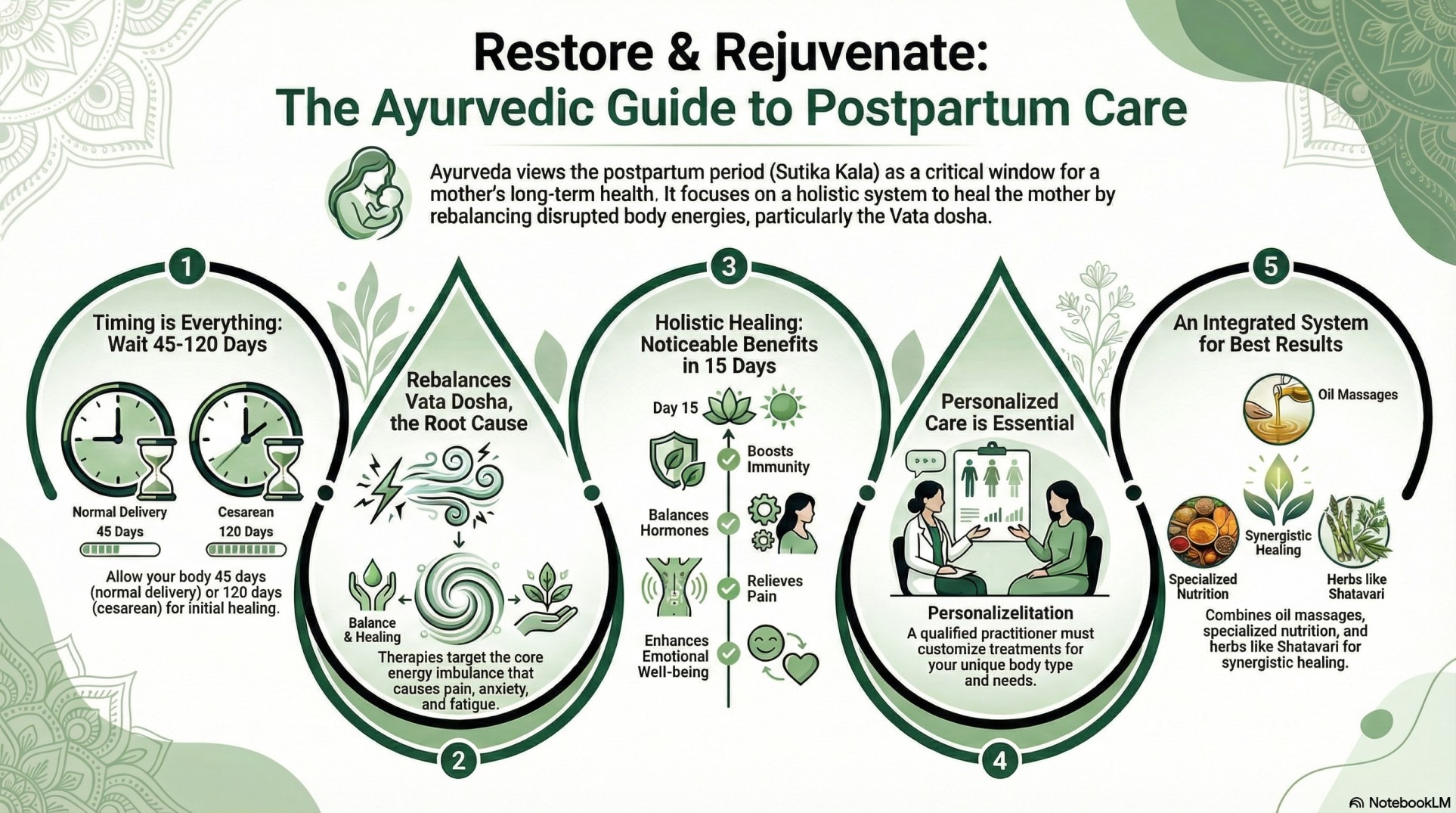
• Wait 45-120 days before starting Panchakarma - Normal delivery requires 45 days, cesarean delivery needs 120 days for initial healing before beginning treatments.
• Panchakarma targets Vata imbalance at the root - Specialized therapies like Abhyanga, Basti, and Shirodhara directly address the air-space element disruption causing postpartum complications.
• Holistic benefits extend beyond physical healing - Treatments boost immunity, balance hormones naturally, relieve pain, improve lactation, and enhance emotional well-being within 15-75 days.
• Personalized care based on body constitution is essential - Authentic Ayurvedic recovery requires consultation with qualified practitioners who customize treatments according to individual dosha imbalances and delivery type.
• Integration of diet, herbs, and therapies maximizes results - Combining warm oil massages, specialized nutrition, and herbs like Shatavari creates synergistic healing effects for sustainable recovery.
Unlike conventional medicine, which primarily focuses on the baby's health, Ayurvedic postpartum care provides balanced attention to maternal recovery, addressing both immediate symptoms and long-term wellness. This ancient wisdom recognizes that proper care during the vulnerable postpartum window determines a mother's health outcomes for years to come.
Understanding Postpartum Recovery in Ayurveda
Ayurveda, the ancient science, sees the postnatal period as a unique physiological state that needs special care. This traditional wisdom thinks over more than physical recovery and focuses on the mother's complete wellness trip.
Why 'Sutika Kala' is a critical phase
Sutika Kala, the Ayurvedic term for the postpartum period, lasts about six weeks after childbirth or until the next menstruation. This phase plays a most important role in long-term health outcomes. The woman's body goes through major changes as it works to return to its pre-pregnancy state.
The body stays in an "immune-suppressed state" during Sutika Kala. Mothers experience weakness in bodily tissues, digestive capacity, and overall immunity. Mothers might face long-lasting effects like digestive problems, back pain, weak immunity, and emotional ups and downs without proper care during this sensitive time.
The role of Vata imbalance after delivery
Vata dosha rises sharply in the body after childbirth. Several factors cause this imbalance: the sudden empty space in the uterus, major loss of blood and fluids, disrupted sleep, and the physical strain of labor.
A persistent Vata imbalance can trigger many complications. These include chronic fatigue, anxiety, tissue dryness, constipation, and poor milk production. Severe cases might lead to postpartum depression and long-term degenerative conditions.
How Ayurvedic care after delivery is different from modern care
Ayurvedic postpartum care takes a unique path compared to conventional methods. Ayurvedic treatment uses a comprehensive approach to heal the root cause instead of just treating symptoms. The focus stays on balancing the body's natural energies through specific diets, herbs, and therapies.
Modern care doesn't deal very well with emotional balance and rest unless they become serious problems. Ayurveda has daily oil massage (abhyanga), specific foods to boost digestion, rejuvenating herbal preparations, and gentle daily routines that ground both mother and child.
Modern medicine looks at short-term recovery, while Ayurvedic care aims to provide lasting health benefits that boost the mother's vitality for years ahead.
Key Panchakarma Therapies for Postpartum Healing

Image Source: SoHum Healing Resort
Panchakarma therapies are a great way to get your body back in balance after childbirth. These specialized treatments help with the most important Vata imbalance that happens after giving birth. They provide relief from common discomforts and promote deep healing.
Abhyanga: Warm oil massage for nourishment
Abhyanga uses warm medicated oils chosen specifically for postpartum needs in a full-body massage. This therapy helps your muscles relax, gets your blood flowing better, and keeps your hormones balanced. New mothers who breastfeed will notice better milk production and more energy. The gentle yet firm strokes help tired muscles recover and make movement easier.
Basti: Medicated enema to balance Vata
Ayurveda calls Basti the "mother of all treatments." It works by putting herbal oils or decoctions through the rectum. We used this mainly to balance Vata dosha, which helps digestive health and prevents constipation - common problems after delivery. Basti cleans out toxins from all three doshas through the colon. Your energy levels bounce back and your overall well-being improves during recovery.
Shirodhara: Calming the mind and nervous system
A continuous stream of warm oil flows over your forehead during Shirodhara. New mothers find their nerves calm down, anxiety reduces, and sleep quality improves with this therapy. It helps handle the emotional ups and downs that come after giving birth, leading to better mental and emotional balance.
Udvartanam: Herbal scrub for detox and toning
This energizing therapy uses herbal powders to gently exfoliate your skin. Blood circulation improves, water retention goes down, and stretched skin becomes firmer. Your metabolism speeds up and fat cells break down faster, which helps with weight management.
Nasya: Nasal therapy for mental clarity and sleep
Nasya puts herbal oils in your nasal passages. You'll notice relief from sinus pressure, better sleep, and clearer thinking. Your doshas balance out and relaxation comes easier, which helps fix sleep problems after giving birth.
Pottali Swedan: Herbal bolus for pain relief
Pottali Swedan massages heated herbal poultices over areas that hurt. This works really well, especially when you have joint pain, back discomfort, or stiff muscles. Heat and medicine from herbs go deep into your tissues to boost circulation and reduce inflammation.
Benefits of Panchakarma for New Mothers
Panchakarma offers amazing benefits that go way beyond the reach and influence of simple recovery for new mothers. This time-tested system brings complete healing through multiple pathways and solves the problems of both visible and subtle postpartum recovery.
Boosts immunity and speeds up healing
Panchakarma's detoxification process makes the immune system stronger by purifying blood and improving organ function. New mothers see noticeable improvement in symptoms within 15 days. Their body aches and swelling usually disappear within 75 days. These therapies repair tissues and rejuvenate cells to build lasting health.
Supports hormone balance naturally
Panchakarma uses special herbs and treatments to regulate hormone fluctuations that lead to postpartum complications. Herbs like Shatavari help balance estrogen levels. The treatments target the mechanisms of imbalances instead of just masking symptoms.
Relieves back pain and joint stiffness
Back pain and stiff joints plague many new mothers. Panchakarma therapy reduces swelling and tenderness in affected joints. These treatments target Vata imbalances that cause pain. Patients often stop needing pain medication after the treatment.
Improves digestion and metabolism
Panchakarma's focus on rekindling digestive fire (Agni) helps fix postpartum digestive issues. Better metabolic function leads to improved nutrient absorption and natural weight management.
Enhances emotional well-being and sleep
About 22% of women in India experience postpartum depression. Panchakarma addresses this through stress-relieving therapies that soothe the nervous system, stabilize emotions, and help mothers sleep better. Treatments like Shirodhara help mothers direct their emotional changes after childbirth.
Promotes healthy lactation and energy levels
Panchakarma protocols include specific herbs like Shatavari, Fenugreek, and Fennel that boost milk production. These treatments also restore depleted energy reserves, helping new mothers handle their responsibilities with renewed vigor and happiness.
How to Begin Ayurvedic Postpartum Recovery
Starting your Ayurvedic postpartum recovery needs the right timing and customized care. You'll get the most from your healing experience after childbirth by knowing the best time and method to start.
When to start Panchakarma after delivery
The right timing will make your Ayurvedic treatments work better. Mothers need to wait 45 days after a normal delivery before they start Panchakarma therapies. Mothers who went through cesarean sections should wait 120 days after delivery. Your body needs this time to complete its original healing before you start deeper therapeutic work.
Choosing the right Ayurvedic doctor or clinic
A consultation with a qualified Ayurvedic physician will start your recovery experience. The physician will study your specific needs and body constitution. The best practitioners have extensive experience in postpartum care and create customized treatment plans instead of using standard approaches.
Customizing treatment based on body type
Real Ayurvedic recovery programs adapt to your unique dosha imbalances and constitution (Prakriti). Your delivery type, symptoms, and body's current state determine the treatment protocols. This personal approach helps you heal better than generic care.
Combining diet, herbs, and therapies for the best results
Recovery works best when multiple elements work together. Your program may include warm oil massages, special diet plans with easy-to-digest foods, and specific herbs like Shatavari and Ashwagandha. The program usually lasts 2-4 weeks, based on your healing needs.
Conclusion
Ayurvedic postpartum recovery through Panchakarma is a profound healing system that helps mothers deal with unique challenges after childbirth. This ancient wisdom recognizes Sutika Kala as a vital window where proper care shapes long-term health outcomes. Modern approaches don't deal very well with maternal recovery, but Ayurveda gives equal importance to mother's well-being among baby's health.
Panchakarma therapies target the root cause of postpartum discomfort—Vata imbalance. New mothers get significant relief from pain, hormonal fluctuations, and emotional instability through specialized treatments like Abhyanga, Basti, and Shirodhara. These therapies also support tissue regeneration and strengthen immunity during this critical time.
Mothers need patience to begin this experience. Natural delivery requires a 45-day wait, while cesarean births need 120 days before starting these treatments. This waiting period lets the original healing happen before deeper therapeutic work starts. Ayurvedic care's individual-specific nature will give a treatment plan that matches each mother's body type and needs.
Panchakarma's all-encompassing approach provides benefits beyond symptom relief. Mothers see improved sleep, better emotional stability, and renewed energy within weeks of treatment. Modern medicine is great during pregnancy and delivery, but traditional Ayurvedic wisdom fills important gaps in the recovery phase.
Motherhood changes a woman's life completely. A complete recovery needs thoughtful attention and care. Ayurvedic postpartum recovery through Panchakarma offers exactly that—a time-tested path to restore balance, rebuild strength, and welcome motherhood with vitality and joy.
FAQs
Q1. How long should I wait after delivery before starting Panchakarma treatments?
For normal deliveries, wait about 45 days before beginning Panchakarma. If you had a cesarean section, the waiting period extends to 120 days. This allows your body time for initial healing before starting deeper therapeutic work.
Q2. What are the main benefits of Ayurvedic postpartum recovery through Panchakarma?
Ayurvedic postpartum recovery through Panchakarma offers numerous benefits, including boosted immunity, balanced hormones, relief from back pain and joint stiffness, improved digestion and metabolism, enhanced emotional well-being, better sleep, and promotion of healthy lactation and energy levels.
Q3. How does Ayurvedic postpartum care differ from modern medical approaches?
Ayurvedic care focuses on holistic, root-cause healing rather than just addressing symptoms. It emphasizes balancing the body's natural energies through specialized diets, herbs, and therapies. Ayurveda also places significant importance on emotional balance and adequate rest, which are often overlooked in conventional care.
Q4. What are some key Panchakarma therapies used for postpartum healing?
Key Panchakarma therapies for postpartum healing include Abhyanga (warm oil massage), Basti (medicated enema), Shirodhara (oil stream on forehead), Udvartanam (herbal scrub), Nasya (nasal therapy), and Pottali Swedan (herbal bolus massage). Each therapy targets specific aspects of postpartum recovery.
Q5. How is Ayurvedic postpartum treatment customized for individual mothers?
Ayurvedic postpartum treatment is tailored to each mother's unique dosha imbalances and constitution (Prakriti). A qualified Ayurvedic physician analyzes the mother's specific requirements, considering factors like delivery type, individual symptoms, and current body state to create a personalized treatment plan combining diet, herbs, and therapies for optimal results.


