
Ayurvedic skin treatment stands as one of the world's oldest holistic healing systems, dating back over 5,000 years, yet remains remarkably effective for modern skin concerns. While contemporary skincare often focuses on quick fixes and superficial solutions, Ayurvedic approaches address the root causes of skin imbalances rather than merely treating symptoms. This ancient system views skin health as a reflection of internal balance, connecting your complexion directly to your overall wellbeing.
Despite technological advances in modern dermatology, many people find themselves returning to these time-tested remedies after experiencing limited results or unwanted side effects from conventional products. Furthermore, Ayurvedic treatments are personalized based on your unique constitutional type or "dosha," offering targeted solutions instead of the one-size-fits-all approach common in today's beauty industry. This personalization, along with the use of natural ingredients and comprehensive healing techniques, explains why these ancient practices continue to outperform many modern alternatives for sustainable skin health.
Understanding Ayurveda and Skin Health
The ancient wisdom of Ayurveda views skin as much more than just an outer covering. In this traditional system, your skin serves as a mirror reflecting your internal health and balance. Unlike conventional approaches that often separate skin issues from overall wellness, Ayurvedic skin treatment integrates multiple dimensions of health into a comprehensive healing framework.
What makes Ayurveda holistic
Ayurveda stands apart from modern skincare systems through its all-encompassing approach that considers the entire person. According to Ayurvedic principles, the skin is not merely a surface organ but a reflection of hidden realities within the body [1]. This ancient science embraces all aspects of a person's lifestyle – from nutrition and emotional balance to exercise and sleeping patterns [2].
The Ayurvedic philosophy emphasizes that true skin health emerges from nurturing the body's innate equilibrium rather than merely addressing surface-level symptoms [3]. This comprehensive methodology examines how diet, lifestyle, emotional health, and environmental factors converge to impact skin wellness. Consequently, treatments aim to create harmony among these elements through a combination of dietary recommendations, lifestyle modifications, and therapeutic practices [4].
Essentially, Ayurveda recognizes the skin as the point of contact between your physical inner and outer worlds – not simply a barrier but a living, breathing, digesting part of your organism [5]. This perspective allows for deeper healing that modern approaches often miss.
The role of doshas in skin care
Central to Ayurvedic skin treatment is the concept of doshas – the three fundamental energies or bio-energies that govern bodily functions: Vata (air/space), Pitta (fire/water), and Kapha (earth/water) [4]. Each person possesses a unique constitutional combination of these doshas that influences their physical, mental, and emotional characteristics [4].
Your dosha constitution directly determines your skin type and its tendencies:
Vata skin tends to be thin, dry, and prone to premature aging; requiring deep hydration
Pitta skin is typically sensitive, warm, and prone to inflammation; benefiting from cooling treatments
Kapha skin appears thick, oily, and resilient but prone to congestion; thriving on detoxification
Understanding your dominant dosha is essential for selecting appropriate Ayurvedic treatments and skincare products, leading to a more effective and tailored approach to skin health [4]. For instance, people with Vata skin need nurturing products with cold-pressed oils or pure cow's ghee to rehydrate their naturally dry skin [2].
Why balance matters more than symptoms
Ayurveda views chronic skin disorders as symptoms of internal imbalances rather than isolated issues [3]. This perspective investigates underlying factors such as digestive health, stress levels, and dosha imbalances as the true causes of skin problems. Accordingly, when doshas become unbalanced, they can manifest as various skin issues, including acne, eczema, psoriasis, and premature aging [4].
The imbalance of specific doshas creates predictable patterns in skin appearance. An increase of Vata dosha results in hyperpigmentation or dull complexion, while Pitta imbalance can cause yellowish discoloration. Similarly, excessive Kapha leads to whitish discoloration and coldness of skin [6].
What truly distinguishes the Ayurvedic approach is its focus on "root-cause healing" rather than symptom management. By addressing these underlying imbalances through personalized interventions, Ayurvedic skin treatment promotes sustainable improvements in both skin health and overall vitality [3]. This methodology fosters long-term benefits that extend beyond alleviating skin disorders to enhancing overall resilience [3].
As a matter of fact, this holistic framework explains why many people experience lasting results with Ayurvedic skin treatments where modern approaches have failed. By restoring balance among the doshas through personalized protocols, Ayurveda creates conditions for the skin to heal naturally from within.
How Dosha-Based Skin Types Guide Treatment
In Ayurvedic skin treatment, understanding your dosha-predominant skin type is fundamental to selecting effective care methods. Beyond the familiar "dry," "oily," or "combination" classifications of modern dermatology, Ayurveda recognizes that skin conditions stem from deeper constitutional patterns that require targeted approaches.
Vata skin: dry and aging
Vata skin typically appears thin, delicate, and dry with a tendency to develop fine lines and wrinkles earlier than other types if not properly moisturized. When Vata becomes imbalanced—especially during fall and early winter—this skin type becomes increasingly dry, potentially developing rough patches, cracks, and fissures. Additionally, vata imbalance often manifests as dark discoloration or patches.
The primary focus for Vata skin care is deep hydration and nourishment both externally and internally. Daily abhyanga (oil massage) with sesame or almond oil provides essential moisture. Vata skin benefits from warm spices like ginger that generate internal warmth. Notably, herbs like ashwagandha can be particularly effective when added to face masks to reduce skin dryness.
Pitta skin: sensitive and inflamed
Pitta skin is naturally sensitive, warm to the touch, and often has a reddish or rosy tint. This skin type typically has less tolerance for hot and spicy foods and experiences more frequent breakouts. During periods of imbalance, Pitta skin becomes prone to inflammation, redness, burning sensations, and may develop conditions like acne, rosacea, or sunburn.
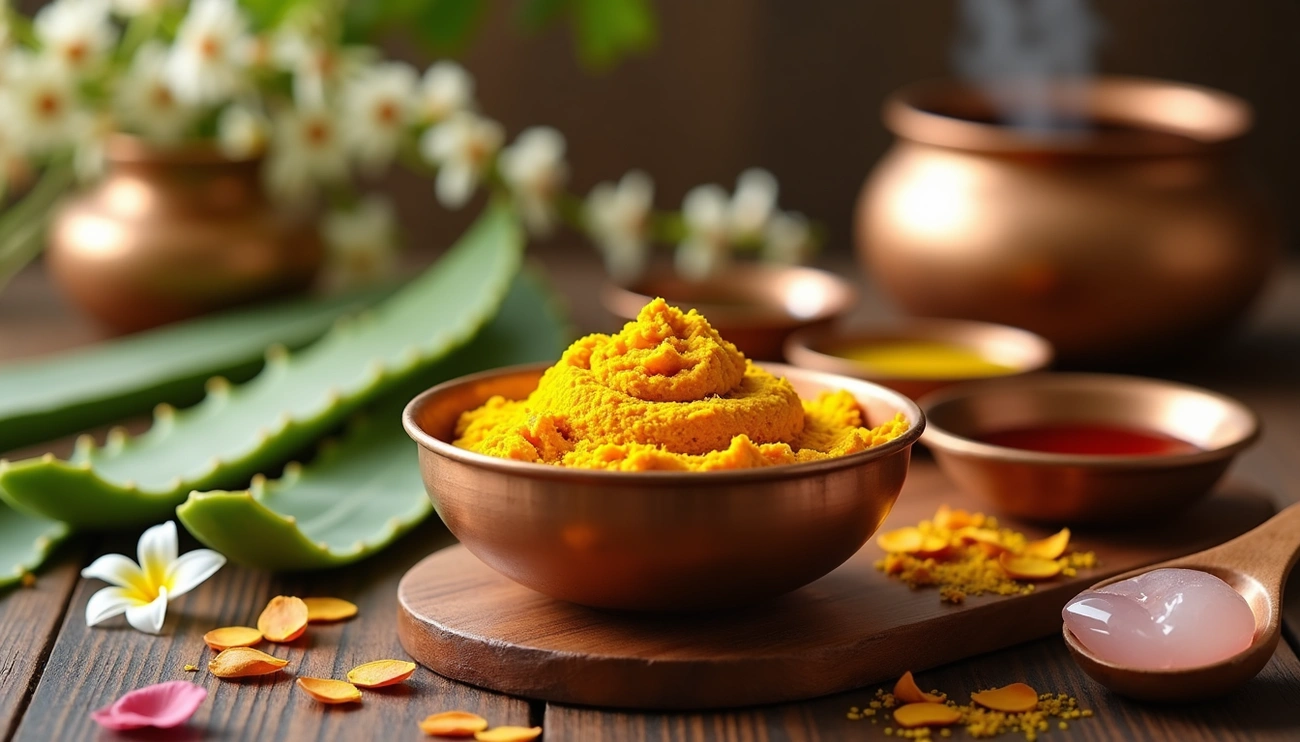
Cooling elements form the cornerstone of Pitta skin treatment. Soothing ingredients like aloe vera, turmeric (which provides anti-inflammatory benefits), and sandalwood (which reduces pimples and visible irritation) help calm reactive Pitta skin. Rose water makes an excellent toner for this skin type, offering both cooling and calming properties. Pitta skin requires protection from excess sun exposure and benefits from light, cooling oils like coconut rather than heavier options.
Kapha skin: oily and congested
Kapha skin tends to be thick, oily, cool to the touch, and naturally resilient with larger pores. Though blessed with fewer wrinkles and greater resistance to aging, Kapha skin becomes prone to congestion, blackheads, cystic acne, and water retention when imbalanced. This tendency increases during late winter and spring when Kapha dosha naturally predominates.
For Kapha skin types, the primary treatment focus is detoxification and stimulation. Dry brushing helps remove obstructions, stimulate lymphatic circulation, and provide gentle exfoliation. Avoiding oil-based creams prevents additional congestion, whereas regular clay masks help draw out impurities. Kapha skin benefits from products containing warming, stimulating herbs that counter its naturally cool, heavy tendencies.
Matching treatments to your dosha
Ayurvedic practitioners design individualized treatment plans based on specific dosha imbalances rather than just addressing surface symptoms. For Vata, treatments emphasize nourishing and moisturizing therapies like abhyanga (oil massage) and herbal steam therapy (Swedana). Pitta treatment protocols focus on cooling, soothing applications including cooling herbal pastes and gentle products. Kapha skin benefits most from herbal exfoliation, steam therapy, and detoxifying herbs.
Internal treatments prove equally important as external applications. Each dosha requires specific dietary adjustments—warming foods for Vata, cooling foods for Pitta, and light, stimulating foods for Kapha. Herbs consumed internally help balance doshas from within; for instance, gout kola and Giloy may soothe conditions like eczema in Kapha-dominant individuals.
The personalized nature of Ayurvedic treatment makes it particularly effective for persistent skin issues where conventional approaches have failed. By addressing the unique constitutional patterns that manifest as skin concerns, Ayurvedic skin treatment creates balance that promotes sustainable healing.
External Ayurvedic Treatments That Still Work
Traditional external treatments remain the cornerstone of effective Ayurvedic skin therapy, offering benefits that modern treatments often struggle to match. These time-tested applications utilize natural ingredients and holistic techniques to restore balance and radiance from the outside in.
Facial massage and Marma therapy
Marma therapy, a specialized form of facial massage, works with 107 vital energy centers located throughout the body. Several of these points are concentrated on the face and head, creating powerful healing opportunities for skin regeneration. Through gentle stimulation of these points, Marma massage enhances microcirculation, delivering vital nutrients and oxygen to skin cells.
This ancient technique activates internal healing processes, supports lymphatic drainage, improves blood circulation, and encourages cell renewal. Moreover, marma stimulation helps relax facial muscles, smoothing expression lines and preventing premature aging. The therapy also engages the parasympathetic nervous system, reducing stress and its negative effects on the skin.
Herbal face masks for each skin type
Ayurvedic face masks utilize kitchen ingredients tailored to each dosha type:
For Vata skin (dry and aging):
1 tbsp chickpea flour
Pinch of turmeric powder
¼ cup rose water or cold milk
Apply for 10-15 minutes before drying
Pitta skin (sensitive and inflamed) benefits from cooling ingredients:
¼ cup pure aloe vera gel
Few drops of rose water
Apply for 10-15 minutes and rinse with lukewarm water
Kapha skin (oily and congested) requires detoxifying elements:
Option 1: Honey with turmeric
Option 2: Multani mitti (fuller's earth) with water
Apply for 10-15 minutes
Oils and serums: Kumkumadi, Manjistha, and more
- Kumkumadi oil stands as a premier Ayurvedic facial treatment, known as the "miraculous elixir" for skin. This luxurious oil contains saffron (kumkuma) plus over 20 precious herbs and oils. It effectively reduces pigmentation, minimizes wrinkles, revitalizes aging skin, and provides intensive repair. For optimal results, apply a few drops to cleansed skin with gentle upward circular motions.
- Manjistha oil (Rubia cordifolia) offers powerful detoxification benefits, making it ideal for acne-prone or congested skin. Its anti-inflammatory properties help treat skin diseases while enhancing the complexion. First, as an exceptional blood purifier, it helps clear pigmentation and treat blemished skin. Second, it promotes lymphatic drainage, reducing puffiness and revitalizing tired skin.
- Simple sesame or almond oil massage also provides significant benefits. These traditional oils work effectively for all doshas, with sesame being particularly beneficial for vata skin types. Their regular application helps retain moisture and improve skin texture through consistent use.
Internal Healing: Diet, Herbs, and Detox
While external applications play a crucial role in Ayurvedic skincare, true transformation begins from within. Ayurveda places immense emphasis on internal healing through dietary adjustments, herbal supplements, and systematic detoxification to address the root causes of skin imbalances.
Foods that nourish each dosha
Ayurveda recognizes that proper nutrition directly impacts skin health through the first two dhatus (tissue layers) which are most visibly represented in the skin. Each dosha requires specific dietary approaches:
For Vata skin, warm, nourishing foods counter dryness and aging. Include sweet fruits like berries and bananas, easily digested vegetables such as sweet potatoes, and healthy fats from nuts, ghee, and dairy to maintain hydration. Warming spices like cardamom, ginger, and cinnamon support proper digestion.
Pitta skin benefits from cooling, hydrating foods that calm inflammation. Incorporate leafy greens, coconut water, and fresh fruits—particularly melons and berries. Favor cooling herbs like mint, fennel, and coriander while avoiding spicy, acidic foods that trigger redness and sensitivity.
Kapha skin requires light, dry, warming foods to balance its heavy, oily nature. Choose astringent fruits like apples and pears, leafy greens, and lighter grains such as barley and millet. Energizing spices including turmeric, ginger, and black pepper help stimulate circulation and reduce congestion.
Herbs like turmeric, neem, and aloe vera
Powerful Ayurvedic herbs work internally to purify blood and balance doshas:
Turmeric contains curcumin with potent anti-inflammatory and antioxidant properties that combat acne, brighten complexion, and promote even skin tone.
Neem, known as "Nature's Pharmacy," offers antibacterial, antifungal, and anti-inflammatory benefits that purify the blood and effectively treat skin conditions.
Aloe vera provides deep hydration while its anti-inflammatory properties help reduce skin inflammation, heal wounds, and enhance natural radiance.
Other valuable herbs include manjistha (blood purifier), giloy (reduces inflammation), amla (high in vitamin C), and ashwagandha (rejuvenates aging skin).
Simple home detox practices
Daily practices can support skin detoxification:
Begin each morning with warm lemon water to stimulate elimination of toxins
Practice oil pulling using sesame or coconut oil for 15-20 minutes to reduce inflammatory skin conditions
Incorporate periodic gentle fasting under proper supervision
Brew detoxifying herbal teas from neem, ginger, or turmeric
Use Triphala or other gentle Ayurvedic bowel supports (virecana) to maintain regularity and clear skin
Panchakarma: the deeper cleanse
For profound detoxification, Panchakarma ("five actions") offers systematic cleansing to remove accumulated toxins (ama). This intensive treatment helps clear chronic skin conditions by addressing their root causes.
The five primary procedures—Vamana (therapeutic vomiting), Virechana (purgation), Basti (medicated enema), Nasya (nasal therapy), and Raktamokshana (blood purification)—remove toxins that manifest as skin disorders. Panchakarma enhances digestive fire (agni), improves nutrient absorption, and restores dosha balance, ultimately revealing clearer, more radiant skin.
These internal approaches work synergistically with external treatments, creating the comprehensive healing that makes Ayurvedic skin treatment superior to symptomatic modern solutions.
Why Ayurveda Outperforms Modern Skincare
Beyond marketing claims and trendy ingredients, Ayurvedic skin treatment offers fundamental advantages that modern skincare often fails to deliver. The ancient system's enduring success rests upon several key principles that address wellness at deeper levels.
Treating root causes, not just symptoms
Ayurveda views chronic skin disorders as symptoms of internal imbalances rather than isolated issues. This holistic approach addresses root causes, leading to sustainable improvements in skin robustness. Unlike modern treatments that often target visible problems, Ayurvedic practitioners investigate underlying factors such as diet, lifestyle, and emotional health, recognizing how these elements converge to impact skin wellness. The focus remains on nurturing the body's innate equilibrium rather than merely addressing surface-level symptoms.
Fewer side effects and long-term benefits
Ayurvedic products typically contain natural, plant-based ingredients free from harsh chemicals that might cause skin irritation and allergies. This gentle approach minimizes the risk of reactions or long-term skin barrier dysfunction. Furthermore, many practitioners report that patients experience significant improvements in skin clarity, reduced flare-ups, and renewed confidence with consistent Ayurvedic treatment. The chemical-free formulations prove ideal for sensitive or reactive skin, including during pregnancy.
Personalization vs. one-size-fits-all
Perhaps most significantly, Ayurveda recognizes that each individual has a unique dosha constitution. Through evaluating an individual's dosha profile, practitioners devise tailored strategies that address specific needs rather than applying generic solutions. This customized approach ensures that skincare routines using herbal oils, pastes, and masks target particular skin types and concerns, delivering effective and natural results that one-size-fits-all products simply cannot match.
Conclusion
Ancient Ayurvedic wisdom continues to prove its effectiveness even as modern skincare solutions flood the market. Throughout thousands of years, these time-tested treatments have maintained their relevance because they address whole-body wellness rather than isolated symptoms.
The personalized approach based on your unique dosha constitution stands as one of the most powerful advantages of Ayurvedic skincare. Your skin receives exactly what it needs—whether the deep hydration for Vata types, cooling remedies for Pitta, or detoxifying treatments for Kapha skin. This customization leads to significantly better outcomes than standardized commercial products.
External treatments such as marma massage, herbal face masks, and specialized oils work harmoniously with internal healing methods. Together, they create comprehensive skin transformation that modern dermatology often fails to achieve. The natural ingredients used in these treatments also minimize irritation risks while maximizing long-term benefits.
Additionally, Ayurvedic practices recognize the profound connection between digestion, stress, and skin health—links that contemporary skincare frequently overlooks. This understanding allows practitioners to target the actual causes of skin disorders rather than merely masking symptoms.
Perhaps most importantly, Ayurvedic skin treatment empowers individuals with sustainable solutions. Many people discover that after switching to these ancient methodologies, their skin not only clears but develops lasting resilience and radiance. The timeless nature of these techniques demonstrates why, after five millennia, Ayurveda remains unmatched for genuine skin transformation. Though modern science continues to advance, these ancient practices still hold wisdom that contemporary approaches have yet to fully embrace.


